AdWords conversion tracking has been updated for the first time in years. The new system allows advertisers to classify conversion actions and track them separately.
Conversion actions can be classified as:
- Purchase/Sale
- Signup
- Lead
- View of a key page
- Other
Actions can be used with pay per click as well as pay per action campaigns. Google launched the pay per action beta test just over a year ago in March 2007.
The new conversion tracking tool allows more sophistication for pay per click advertisers who have for the longest time only been able to track overall conversion volumes. Advertisers using the pay per action system will benefit much more, though, as they can now determine which keywords lead to more valuable actions and are worth bidding more for.
The ‘Campaign Summary’ page still shows the total number of conversions, cost per conversion and conversion rate. However, a new ‘Conversion Tracking’ page has been developed, which provides a breakdown of the number of conversions by conversion type.
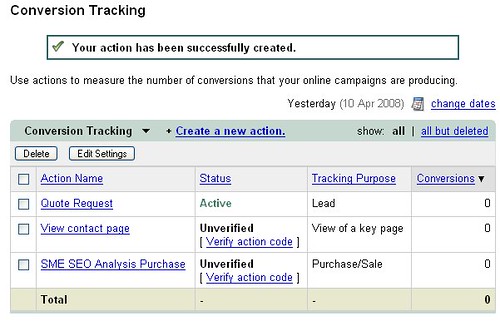
Strangely enough, the various actions cannot be viewed for individual campaigns and Ad Groups just yet. The reports have not been updated either, so the Conversion Tracking page offers the best, albeit extremely limited, view of the types of actions visitors from AdWords have taken on the site.