


by: Lourenço Gonçalves and Farhad Divecha
Top B2B Fintech SEO Strategies Examined
Organic search traffic remains one of the most important drivers of qualified traffic to fintech websites. In this article, AccuraCast’s B2B and fintech SEO agency team examine strategies to increase organic search visibility.
We studied the SEO methodologies adopted by the top fintech companies in 2025. Our research estimates the importance high-growth fintechs attach to SEO, their technical and content strategies, and the role off-site factors play in their prominence.
B2B fintech landscape for SEO
The table below lists some of the top B2B fintech firms in 2025, according to Fintech Magazine and Beauhurst. We estimated their focus on B2B, based on revenue reports from company communications and reputable business summaries, and scored their key search marketing performance indicators based on data from Semrush.
| % B2B focus | Authority score | AI visibility score | Organic keywords | Paid keywords | |
|---|---|---|---|---|---|
| Stripe | 90-97% | 78 | 66 | 1.5M | 2.1k |
| Revolut | 25-35% | 92 | 75 | 4.8M | 11.8k |
| FNZ | 100% | 40 | 27 | 7.3k | 0 |
| Wise | 25-35% | 94 | 60 | 11.9M | 2k |
| Checkout.com | 100% | 52 | 25 | 48.6k | 0 |
| SumUp | 95% | 65 | 24 | 404.5k | 763 |
| Starling Bank | 25-35% | 55 | 33 | 137.8k | 32 |
| Adyen | 100% | 43 | 61 | 122.7k | 6.6k |
| GoCardless | 100% | 64 | 45 | 389k | 407 |
| OakNorth | 95% | 40 | 23 | 9.4k | 374 |
| Ant Group | 55-70% | 42 | 19 | 9k | 6 |
| Plaid | 100% | 51 | 65 | 72.7k | 1.1k |
| Coinbase | 25-35% | 83 | 82 | 2.1M | 123 |
It’s fairly obvious (and expected) the fintech companies that cater to both B2C and B2B audiences fare much better on domain authority scores due to their high public profile and regular press coverage these brands receive. The organic keyword coverage of some of the B2B-focused fintechs on this list is impressive, and can be attributed to their focus on generating high quality content, which helps SEO.
How is B2B fintech SEO different from B2C?

Before we get stuck in the detail, it’s important to understand that the core SEO principles for B2B and B2C fintech don’t differ. However, the SEO strategy adopted by B2B fintech companies must take into account the audience’s search behaviour, which is markedly different from that of consumers.
Company employees making fintech purchase decision do a lot more research than consumers before committing to a provider. That’s because the decision will almost definitely impact their core business. Fintech providers must, therefore, target long-tail, high intent keywords with a strong b2b focus.
Multiple stakeholders are often involved in the buying journey, which means vendors must cater to the decision-making considerations of varied roles – CFO, CTO, and procurement, among others.
Core technical SEO considerations for B2B fintech sites
All the standard SEO requirements of financial services firms apply to B2B fintech sites. Read our ultimate guide to SEO for financial services to get the basics right. Here we’ll focus on technical SEO considerations specific to fintech firms that sell to other businesses.
Role of E-E-A-T in B2B fintech
B2B fintech sits in an extreme end of the YMYL (Your Money, Your Life) category. Technical SEO must support trustworthiness, which is weighted heavily. Search engines and customers alike need to see your content is produced by qualified, real experts in finance, regulation, cybersecurity, payments or risk.
Enterprise buyers have much higher expectations of reliability and trust than consumers. It is critical for fintechs that sell to large enterprises to demonstrate credibility instantly.
Learn how to demonstrate E-E-A-T for financial services SEO.
Adyen and FNZ demonstrate experience by showcasing their big-brand clients prominently on their homepage. Both platforms also talk about fraud prevention and regulatory compliance on the homepage, though security and trust signals are a lot more muted on their homepage. The platforms don’t put authorship on their blogs and news articles front and centre, which indicates a lack of focus on authoritativeness.
Revolut and Wise, on theo ther hand, put trust signals front and centre on their homepage. They both show widgets and signals of trustworthiness, such as app store reviews, TrustPilot ratings prominently on the homepage. Customer support and fraud prevention are also clearly stated, which helps build their E-E-A-T.
Content hierarchy for topic clusters
Long buying cycles with multiple decision makers require fintech marketers to produce a lot of content that addresses client questions and considerations at every stage of the journey. The vast volumes of content requires a well-thought-out site architecture and content hierarchy that supports this.
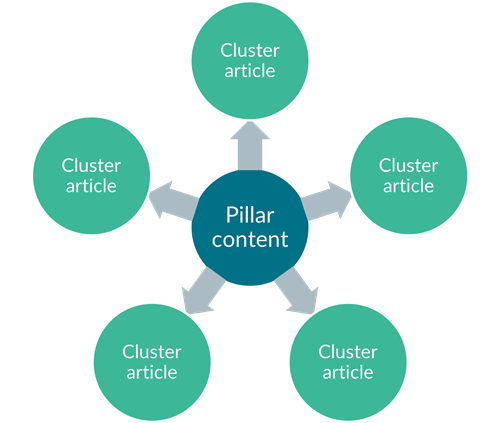
From an SEO point of view, creating topic clusters is important to demonstrate topical authority to search engines and AI platform LLMs. Your content should be grouped into primary “pillar” content that is usually broader in scope, and a number of cluster articles that deep-dive into specific sub-topics related to the pillar content. B2B fintech topic cluster content should range from basic knowledge to technical information, providing sufficient detail for different types of personnel involved in the purchase decision.
Mapping keywords to the B2B sales funnel can guide your content production. Typically, the top of funnel (TOF) content should be educational and problem-awareness related. Middle of funnel (MOF) content should be product and competitor comparison and evaluation related. And bottom of funnel (BOF) content should be transactional, targeting purchase-intent keywords.
Stripe content is organised throughout their site in easily-navigable clusters around specific pillar pages. This is seen in the form of product pages with cluster pages covering sub-topics like features, documentation, pricing, devices. And it’s also carried over to Stripe’s resources pages, which include customer stories – great to demonstrate experience for E-E-A-T – blogs, guides and press. All their customer stories link back up to product pages.
Security, compliance, user experience & trust signals
Fintech prospects often access sites from secure corporate networks, VPNs, or legacy browsers, all of which can amplify performance bottlenecks. These decision makers expect reliability and speed. B2B fintech SEO agencies and in-house personnel should aim for very high scores on Core Web Vitals, serve static assets via a CDN, and heavily optimise third-party scripts.
Data security is critical for fintech buyers, and prospects make decisions based on in-depth scrutiny of cybersecurity signals more than almost any other sector. It goes without saying that your site must enforce HSTS with preload, maintain a clean TLS configuration, block all non-HTTPS resources at build and implement strict content security policies to reduce vulnerabilities.
Read more about technical SEO and security compliance for financial institutions.
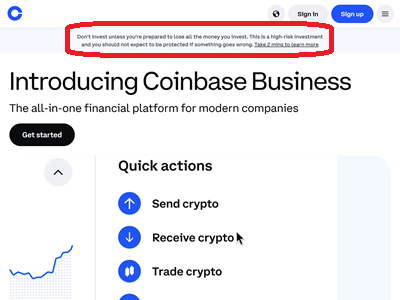
Coinbase operates in the crypto market, which tends to draw the most scrutiny. Individual investor and business sections on their site have disclaimers right at the top of the page, informing visitors about the risks associated with investing in crypto.
Disclaimers are more prominent on the platform sign-up and support / contact pages. The help section of the site also includes prominent notices linking visitors to an article about security best practices and how to keep their account safe.
Link building and digital PR for B2B fintech authority
Unlike their consumer-facing counterparts, B2B fintech companies don’t tend to get as much automatic press coverage. This means you must invest resources into growing your site authority with high-quality, editorial links from authoritative sources.
Using original research & reports as link magnets
In-depth content formats are a great way to establish topical authority and attract links. white papers, detailed guides, high-value case studies, interactive tools and data visualisations are commonly used tactics to earn links from financial and tech domains, as well as mainstream business press.
B2B fintechs can also leverage industry partnerships and integrations for link opportunities. Most ecosystem partners can become link sources with the right approach.
Learn how to do link building and digital PR in regulated financial markets.
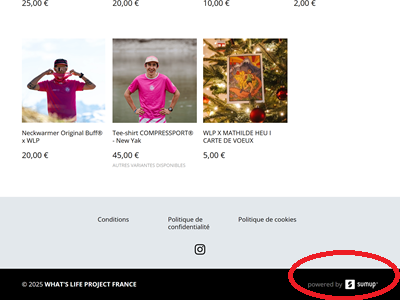
SumUp gets a lot of links from the SumUp Online Store, an e-commerce tool from the payment provider that allows small businesses to quickly create a simple online shop to sell products and services.
This tool provides utility and convenience for SumUp’s target clientele, and allows the payment tech provider to keep clients within their ecosystem.
One criticism of this as a link building service is that it could heavily skew the backlink profile towards one link source of mediocre authority – the individual stores can be hosted on sub-domains, which isn’t as beneficial as stores set up with the same platform but on independent domains.
To balance this, they should complement the strategy with digital PR focused on high-authority financial news publications and small business portals.
Conclusion: Future-proofing your B2B fintech SEO strategy
Building a resilient technical SEO foundation that’s fast, secure, structured and compliant, can facilitate fintech companies scaling across new product lines and into new markets.
Investing in expert-led, verifiable content that demonstrates sector authority will help grow organic search prominence and position the brand for AI search visibility.
Prioritising machine-readability and interoperability through simple steps like the use of structured data & semantic markup, and optimising API documentation, will keep your site aligned with the shift of search towards AI-driven retrieval and entity-based ranking.
Working with a specialist fintech SEO agency like AccuraCast that has experience within highly regulated sectors and working with B2B brands can set your firm up for success.
If you’d like an expert view on strengthening your SEO roadmap for 2026 and beyond, we’re here to help.
About the Authors

Lourenço is a Senior SEO Executive at AccuraCast, responsible for the strategic and tactical elements of Organic channel acquisition. With over 10 years of experience working with international brands for clients in Europe, North and South America.

Farhad is the Group CEO of AccuraCast. With over 20 years of experience in digital, Farhad is one of the leading technical marketing experts in the world. His specialities include digital strategy, international business, product marketing, measurement, marketing with data, technical SEO, and growth analytics.