


by: Avon Rodrigues
Mobile-First SEO for Financial Services: What Actually Works
Mobile optimisation stopped being optional for finance brands back in 2015-2016, when Google’s algorithm updates pushed mobile optimisation from a “nice-to-have” to “critical”. In 2026, our work as the leading SEO agency for financial services brands is shaped by how people discover, evaluate and choose providers irrespective of the type of device they’re searching on. In other words, the requirement for mobile-first SEO is a given.
Search behaviour has evolved significantly. Users today get quick answers before visiting websites. They compare providers across multiple platforms and expect a seamless experience when they are ready to act.
This shift means SEO is no longer just about rankings. It is about visibility across channels, credibility, and delivery of a mobile-friendly experience that supports real time decision making.
1. Credibility Drives Performance – Establishing YMYL Authority
In the finance and insurance industry, appearing in search results is only part of the job.
Users are often introduced to brands through AI-generated answers before visiting a website. This makes credibility a key factor in both visibility and conversion. Demonstrating Consumer Duty compliance, and quick & clear KYC workflows is expected by savvy consumers, search engines and AI.
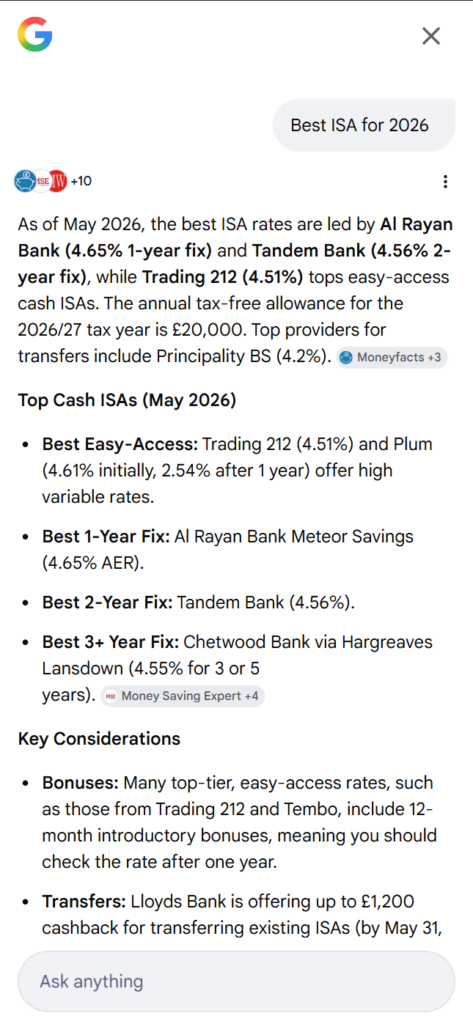
Search engines evaluate trust signals such as who created the content, whether it is accurate, and how consistent the brand appears across the web. This is particularly important in regulated environments overseen by organisations like the Financial Conduct Authority.
For brands investing in SEO, this means content must reflect genuine expertise, remain accurate and stay consistent across all platforms.
Keyword targeting still plays a role, but it cannot carry the strategy alone. Clear, structured content improves visibility and builds the confidence users need to move forward. Brands investing in a stronger organic search optimisation strategy tend to see more consistent long-term performance.
Read our guide to building E-E-A-T for finance SEO
Scaling credibility internationally requires more than a simple translation. Ensuring your brand resonates in every market can be challenging. Read our tips on content localisation: Turning translation into true engagement. We’ve also put together an International SEO Checklist, which provides a practical framework for international SEO, broken down into the categories of site architecture, localised content, and authority-building.
2. Mobile Experience Drives Results – Optimising Core Web Vitals
Most financial websites are designed to be mobile responsive. That does not mean they perform well.
Users engaging with financial products on mobile are often comparing options quickly, completing tasks between other activities and expect fast interactions.
If a page loads slowly, a form feels complicated to fill or key information is difficult to find, they leave.
Strong performance depends on getting the fundamentals right:
- Fast-loading pages, especially pages with interactive tools
- INP (Interaction to Next Paint) is the 2026 standard for mobile
- Easy access to rates, fees and other key financial details
- Simple form completion
- Clear next steps throughout the journey
Improving site speed, usability and crawlability is where a technical SEO agency can add real value for financial websites. Back-end friction can sabotage mobile performance, and recent research has shown this can reduce organic search visibility 15-20% on average.
Read our best-practice recommendations for technical SEO and security compliance for financial institutions to ensure your site is fast, secure, and indexable.
3. SEO Works Best When Connected to Other Channels

SEO does not operate in isolation. Any good financial services SEO agency will tell you that.
In the insurance and financial sectors, search is often the starting point. Users discover a brand, validate it through reviews on other platforms and return later to convert. That means your visibility needs to extend beyond a single interaction.
Our work with global financial services corporations like WTW, PwC and AXA has shown that combining organic search with paid activity helps maintain visibility after the first visit. It also allows brands to re-engage users who have already shown intent.
A more connected approach to search and media ensures consistency across touchpoints and reduces the chances of losing potential customers along the way.
Learn how you should combine SEO and PPC to deliver a killer campaign.
4. The Customer Journey Is Multi-Stage
Financial decisions rarely happen in one session.
A typical journey starts with a quick mobile search, followed by deeper research and ends with a conversion on another device.
Each stage has different needs:
| Stage | User Intent | SEO Content Priority | Example Search Query |
|---|---|---|---|
| Early | Information Seeking | Clear, direct answers to “How-to” and “What is” queries. | How to start an ISA on mobile |
| Mid | Comparison | Detailed breakdowns of rates, terms, and third-party validation | Best high-yield bonds |
| Final | Action | Low-friction forms and instant-load conversion pathways. | Open FX trading account |
Content plays a central role throughout this journey. The structure, clarity and depth of information all influence whether users continue or drop off. This is where a well-defined content strategy for financial brands makes a measurable difference.
Learn how to combine content marketing and SEO for growth.
5. Data Should Inform Every Decision
Customer acquisition in financial services is expensive, so decisions need to be grounded in real data.
Small issues such as a confusing form or slow-loading page can prevent conversions.
Understanding how users behave is critical. Where they drop off, which pages perform well and what causes friction all need to be analysed.
Bringing together search data, on-site behaviour and campaign insights makes it easier to identify what needs to change. This is best guided by ongoing SEO performance insights that highlight where improvements will have the greatest impact.
Being Chosen Matters More Than Being Seen
In financial services, visibility is only part of the equation.
Users compare options carefully. If something feels unclear or difficult, they move on. Effective SEO ensures the right audience finds you, the content builds trust and the experience supports action.
When these elements work together, your brand becomes the obvious choice.
To master the broader strategic framework that underpins these mobile shifts, see our Ultimate Guide to SEO for Financial Services, where we break down the full roadmap for digital dominance.
How Accuracast Supports SEO for Financial Services
At Accuracast, we focus on what happens beyond the initial click.
Our work combines technical improvements, content built on expertise and campaigns that maintain visibility throughout the customer journey.
If you are reviewing your current approach or looking to improve performance on mobile, working with SEO specialists for financial services can help identify gaps and prioritise the changes that will have the greatest impact.
About the Author

Avon drives scalable growth at AccuraCast by bridging the gap between data-driven strategy and performance-led acquisition. Specializing in the digital-first era, he transforms complex market trends and raw data into actionable marketing insights that keep brands ahead of the curve.